- +91 75677 63301
- 24*7 Emergency Care
All Cashless / Insurance Facilities Available •
All Cashless / Insurance Facilities Available •
All Cashless / Insurance Facilities Available


Medically reviewed by Dr. Karn Maheshwari, MS Ortho, DNB, FNB Hand Surgery · Krisha Hand Hospital, Ahmedabad ·
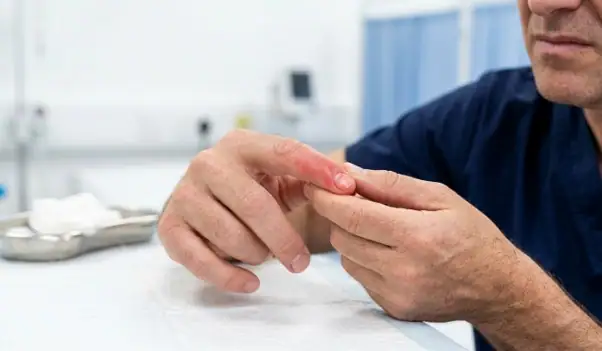
A sharp or persistent pain in the tip of your finger when pressed can make everyday activities uncomfortable. You may notice pain while typing, gripping objects, using your phone, or even when lightly touching the fingertip.
Fingertip pain can have several causes, ranging from a minor injury or splinter to problems involving the digital nerves, nail bed, bone, tendons, blood vessels, or soft tissues. In some cases, persistent or severe pain may be related to conditions such as a glomus tumor or nerve injury.
Understanding the possible cause and recognizing warning signs can help you know when simple initial care may be reasonable and when evaluation by a doctor or hand and wrist specialist is appropriate.
Table of Contents
ToggleThe fingertip contains a dense network of sensory nerves, blood vessels, bone, soft tissue, and structures around the nail. Pain can develop when one or more of these structures is irritated, inflamed, compressed, infected, or injured.
Depending on the underlying cause, fingertip pain may feel:
The exact location of the pain, what triggers it, and the presence of other symptoms can provide important clues about the underlying problem.

Even a relatively small injury can make the fingertip painful and tender when pressed. This can happen after accidentally hitting the finger, closing a door on it, or repeatedly using the hand during sports or work.
Common examples include:
Symptoms may include:
Mild injuries often improve gradually, but significant pain, swelling, deformity, or difficulty moving the finger may indicate a more serious injury.
Because the fingertips have a dense network of sensory nerves, even minor nerve irritation or injury can cause significant pain, burning, tingling, or hypersensitivity.
A digital nerve may be affected by a cut, crush injury, surgery, scar tissue, or other trauma.
Symptoms may include:
Persistent numbness or severe nerve-type pain after an injury should be evaluated by a hand specialist.
A glomus tumor is a rare, usually benign tumor that can develop beneath or around the fingernail. Despite being small, it can cause disproportionately severe fingertip pain.
Think of a glomus tumor if:
Because glomus tumors can be small and difficult to detect, persistent fingertip pain with marked cold sensitivity should be evaluated by a hand specialist.
An infection can develop around the fingertip after a cut, puncture wound, nail injury, splinter, or other break in the skin.
A felon is a painful infection or abscess involving the soft tissue of the fingertip.
Possible symptoms include:
An infection can worsen without appropriate treatment, so increasing pain, swelling, or pus should not simply be treated with home remedies.
A small splinter, piece of glass, metal fragment, or other foreign material can become embedded in the fingertip.
This may cause very localized pain when the fingertip is pressed, particularly if the foreign body is close to a nerve or other sensitive structure.
Possible symptoms include:
If a foreign body is deeply embedded or difficult to remove safely, medical evaluation may be required.
The nail bed is the tissue underneath the fingernail and can be injured by crushing, catching, or direct trauma.
Nail-bed injuries may cause:
More significant nail-bed injuries may occur along with an underlying fingertip fracture.
The bone at the end of the finger is called the distal phalanx. A direct blow, crush injury, or other trauma can cause a fracture in this area.
Possible symptoms include:
An X-ray may be required to determine whether a fracture is present.
A subungual hematoma occurs when blood collects underneath the fingernail, usually following an injury.
It may cause:
The severity of the injury and whether an underlying fracture is present may determine the appropriate treatment.
Injuries or inflammation involving the tendons and soft tissues around the finger can cause pain and tenderness.
Symptoms may include:
Tendon injuries may require assessment of both the structure involved and the function of the finger.
Arthritis affecting the small joints of the finger can cause pain, stiffness, swelling, and tenderness.
Pain may become more noticeable when the finger is used or when pressure is applied around an affected joint.
Depending on the type and severity of arthritis, treatment may include activity modification, medication, therapy, injections, or other specialist-guided treatment.
After a cut, crush injury, or surgery, a nerve can sometimes develop a painful scar or neuroma.
This can cause:
A hand specialist can assess whether a nerve-related problem may be contributing to persistent fingertip pain.
Pain that seems disproportionate to the visible injury
Some people experience significant fingertip pain or discomfort when exposed to cold, particularly when blood flow or vascular responses are affected.
Cold-related symptoms may include:
Cold sensitivity accompanied by severe or persistent fingertip pain should be evaluated, particularly when there are noticeable changes in finger color or sensation.
Trigger finger usually causes pain and tenderness at the base of the affected finger or in the palm, rather than directly at the fingertip.
It is typically associated with:
Therefore, if pain is specifically localized to the fingertip, other causes should also be considered.
Fingertip pain can involve several small and closely connected structures, and identifying the exact source may require a focused examination of the hand.
A hand and wrist specialist can evaluate problems involving:
This is particularly important when pain is severe, persistent, unexplained, or associated with numbness, weakness, an injury, or significant sensitivity to touch or cold.
A specialist evaluation can help determine whether the pain is related to a simple soft-tissue injury or requires further investigation or treatment.

Seek medical attention promptly if fingertip pain is accompanied by:
Diagnosis depends on the symptoms, history, and suspected cause. A hand specialist may evaluate:
Depending on the findings, investigations may include:
Early evaluation can help identify the underlying cause and guide appropriate treatment.
For mild fingertip pain after a minor injury, temporary rest and avoiding activities that aggravate the pain may help.
However, fingertip pain should not always be managed only at home. Conditions such as infection, fracture, foreign body, nerve injury, or glomus tumor may require professional evaluation.
If the pain is severe, persistent, unexplained, or associated with numbness, swelling, discoloration, or difficulty moving the finger, consult a doctor rather than relying solely on home care.
Treatment depends entirely on the underlying cause.
Depending on the diagnosis, treatment may include:
For conditions such as significant nerve injuries, tendon injuries, fractures, infections, or glomus tumors, treatment should be guided by an appropriately trained specialist.
Consider consulting a hand and wrist specialist if:
Early evaluation can help identify the underlying problem and determine the appropriate treatment before the condition affects finger function.
Persistent fingertip pain, particularly when it is associated with touch sensitivity, numbness, cold sensitivity, swelling, or difficulty moving the finger, deserves proper evaluation.
The cause may be as simple as a minor injury, but it can also involve the nerve, nail bed, bone, tendon, blood vessels, or other structures of the fingertip.
A hand and wrist specialist can assess the symptoms, identify the likely source of pain, and recommend appropriate treatment.
If your fingertip pain is persistent, severe, recurring, or affecting your daily activities, consider scheduling an evaluation with a hand specialist.
For additional patient education, readers may refer to the following organizations:
American Society for Surgery of the Hand (ASSH)
Common causes include minor trauma, nerve irritation or injury, infection, splinters or foreign bodies, nail-bed injuries, fractures, tendon or soft-tissue problems, arthritis, and conditions such as a glomus tumor.
Yes. Digital nerve irritation or injury can cause sharp, burning, electric-like, or stabbing pain, along with tingling, numbness, or increased sensitivity to touch.
Marked fingertip pain that becomes significantly worse with cold can occur with conditions such as a glomus tumor or certain nerve or vascular problems. Persistent symptoms should be evaluated by a hand specialist.
Yes. A retained splinter, piece of glass, metal fragment, or other foreign body can cause very localized tenderness and pain when pressure is applied.
Not always. Mild pain after a minor injury may improve with time. However, severe or persistent pain, numbness, discoloration, significant swelling, infection, or difficulty moving the finger requires medical evaluation.
The duration depends on the cause. Minor injuries may improve over days, while nerve injuries, fractures, infections, tendon problems, or other conditions may require specific treatment.
Seek medical evaluation if pain is severe, worsening, keeps returning, lasts more than 2–3 weeks, or is accompanied by numbness, weakness, swelling, discoloration, infection, significant cold sensitivity, or difficulty moving the finger.

Dr. Karn Maheshwari is the founder of Krisha Hand Hospital, Ahmedabad, established in 2016. He is the only FNB-qualified hand surgeon across Gujarat, Rajasthan, and Madhya Pradesh.
With MS and DNB in Orthopedics, Dr. Maheshwari specializes in treating a wide range of hand and wrist conditions, including carpal tunnel syndrome, sports hand injuries, orthopedic hand surgery, ganglion cysts, mangled hand injuries, congenital hand differences, brachial plexus palsy, cerebral palsy & spastic hand, hand tendinopathy, hand microsurgery, hand swelling, hand transplants, hand reimplantation, rheumatoid hand deformities, and peripheral nerve injuries & compressive neuropathies.
Dr. Maheshwari’s unmatched expertise and patient-centric approach ensure world-class treatment, advanced surgical solutions, and optimal recovery for patients with complex hand and wrist conditions.
WhatsApp us