Krisha Hospital

Best Carpal Tunnel Syndrome Treatment in Ahmedabad

Specialized Carpal Tunnel Syndrome Care by Dr. Karn Maheshwar at Krisha Hand Hospital

Satisfied patients
Satisfied Patients
0 +
Hand surgeries
Carpal Tunnel Syndrome Surgeries
0 +
Awards
Awards
0 +
9+ Year Experience
Years
0 +

What is carpal tunnel syndrome?

The carpal tunnel is a rigid passage in the wrist formed by bones and ligaments, housing the median nerve and several tendons. When this tunnel narrows or the surrounding tissues swell, it exerts pressure on the median nerve, leading to the symptoms of Carpal Tunnel Syndrome.

This condition is more prevalent in individuals who engage in repetitive hand movements or have underlying health issues that increase susceptibility.

Symptoms of carpal tunnel syndrome

Carpal Tunnel Syndrome symptoms usually start gradually and worsen over time. Early recognition is crucial for effective treatment. Common symptoms include:

Tingling or Numbness:

Often felt in the thumb, index, middle, and ring fingers, especially during sleep or after repetitive activities.

Weakness

Difficulty gripping objects or performing fine motor tasks, such as buttoning a shirt.

Pain or Discomfort

Radiating pain from the wrist up the arm or down into the palm and fingers.

Swelling sensation

A feeling of swelling in the fingers, even when no visible swelling is present.

Causes of carpal tunnel syndrome

Several factors can contribute to the development of CTS, including:

  • Repetitive Movements: Typing, sewing, or playing musical instruments involve repeated wrist motion that can strain the wrist over time
  • Medical Conditions: Conditions like diabetes, arthritis, and hypothyroidism may cause nerve damage, inflammation, or fluid retention.
  • Pregnancy: Hormonal changes during pregnancy cause fluid retention, increasing temporary CTS risk.
  • Wrist Injuries: Fractures, sprains, or wrist trauma can affect the carpal tunnel structure.
  • Genetics: A smaller carpal tunnel or inherited tendon inflammation can increase risk.

Risk factors of carpal tunnel syndrome

Several factors increase the risk of Carpal Tunnel Syndrome, including lifestyle habits and medical conditions. Identifying them early can help prevent or reduce symptoms.

Occupation

Repetitive hand movements, vibrating tools, and poor ergonomics can strain the wrist and median nerve.

Age & Gender

Age & Gender

CTS is more common after age 30 and occurs more frequently in women.

Medical Conditions

Medical Conditions

Diabetes, arthritis, thyroid disorders, and obesity increase nerve compression risk.

Hormonal Changes

Hormonal Changes

Pregnancy and menopause can cause fluid retention and tendon changes.

Age & Gender

Genetics

A smaller carpal tunnel or family history can raise susceptibility.

Other Factors

Other Factors

Smoking, stress, and overuse of hands without breaks can worsen strain.

How is carpal tunnel syndrome diagnosed?

Accurate diagnosis of Carpal Tunnel Syndrome (CTS) is essential for effective treatment. A healthcare professional will typically use a combination of medical history, physical examinations, and diagnostic tests to confirm the condition. Below is a detailed look at the process:

The first step in diagnosing CTS is obtaining a detailed medical history. The doctor may ask questions such as:

  • When did the symptoms begin?
  • Are symptoms worse at night or during specific activities?
  • Do you perform repetitive hand or wrist movements daily?
  • Are there any underlying health conditions, such as diabetes, arthritis, or thyroid disorders?
    This information helps identify potential causes or contributing factors.

The doctor will perform a physical examination of your hands, wrists, and arms. They may:

  • Inspect for weakness: Test the grip strength of your hand and fingers.
  • Check for tingling or numbness: Gently press or tap on the median nerve at the wrist (Tinel’s sign) to see if it triggers symptoms.
  • Perform the Phalen’s test: Ask you to flex your wrists by pressing the backs of your hands together for about a minute to check if it causes tingling or pain.
  • Look for muscle atrophy: In advanced cases, the doctor might observe wasting of the muscles atthe base of the thumb.

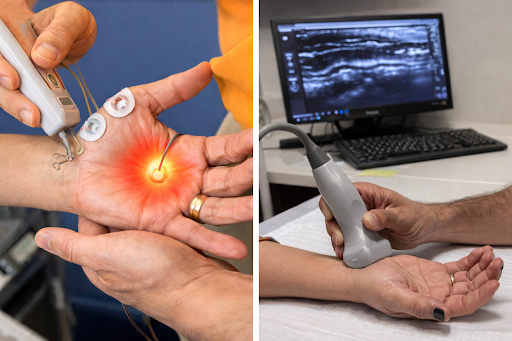
Nerve conduction studies are one of the most definitive diagnostic tools for CTS. This test measures how well electrical signals travel through the median nerve. A slowing of signals in the wrist area can confirm nerve compression.

An EMG test may be conducted to evaluate the electrical activity of muscles and assess whether there’s any nerve damage. Thin needles are inserted into the muscles to record electrical signals during rest and contraction.

Ultrasound imaging can help visualize the structure of the median nerve and surrounding tissues, identifying any swelling or abnormalities

An MRI may be used in rare cases to detect structural problems, such as a cyst or tumor, that could be compressing the nerve.

FNB – (Hand & Microsurgery) | Superspecialist  in Hand, Wrist & Microsurgery | MS Ortho | DNB Ortho

  • One of Gujarat’s leading specialists in Carpal Tunnel Syndrome and Hand, Wrist & Microsurgical Reconstruction
  • Expert in diagnosis, non-surgical care, and 1200+ CTS surgeries, including nerve decompression and microsurgical techniques.
  • Helps patients regain hand function, strength, and confidence after CTS or nerve-related injuries.
  • Guided by five core values: Knowledge, Technology, Humanity, Transparency, and Affordability.
  • Dedicated to empowering patients, educating doctors, and preventing hand injuries across workplaces and daily life.

CTS Patients
0 +
CTS Surgeries
0 +
Years of experience
0 +

Carpal Tunnel Syndrome (CTS) Treatment in Krisha Hand Hospital

Non-Surgical Treatments for Carpal Tunnel Syndrome

Non-surgical treatments are usually recommended in early or mild cases of Carpal Tunnel Syndrome. These options may provide symptom relief but often do not treat the root cause, and symptoms can return over time.

Wrist Splints

Wrist Splints

 Night splints keep the wrist neutral and reduce pressure on the median nerve.

Cons: Temporary relief; compression may persist.

Physiotherapy

Physiotherapy

Targeted exercises improve wrist mobility and reduce strain. Dr. Karn Maheshwari provides customized physiotherapy plans.

Cons: May not fully relieve nerve compression in severe cases.

Medications

Medications

 Anti-inflammatory drugs or steroid injections help reduce swelling and pain.

Cons: Short-term relief; repeated use may weaken tissues.

Activity Modification

Activity Modification

Ergonomic changes and regular breaks reduce wrist strain.

Cons: Not practical for all jobs and cannot reverse nerve damage.

While these treatments can ease symptoms, carpal tunnel release surgery is often the most effective long-term solution for moderate to severe cases, as it directly relieves median nerve compression and restores hand function.

Surgical Treatments for Carpal Tunnel Syndrome

Surgery is recommended when non-surgical treatments fail or symptoms are severe, such as ongoing pain, numbness, or hand weakness affecting daily activities. The goal of surgery is to relieve median nerve pressure by cutting the transverse carpal ligament.

Carpal Tunnel Release Surgery

Carpal tunnel release is a common and effective procedure that reduces symptoms and prevents long-term nerve damage. There are two main surgical techniques:

There are two main techniques for this surgery: Open surgery and Endoscopic surgery.

Open Carpal Tunnel Release

Open Carpal Tunnel Release

Procedure:
A small 2–3 cm incision is made on the palm near the wrist. The surgeon directly cuts the transverse carpal ligament to release pressure on the median nerve.

Advantages:

  • Direct visibility and high precision
  • Suitable for severe or complex cases
Endoscopic Carpal Tunnel Release

Endoscopic Carpal Tunnel Release

Procedure:
One or two small incisions (under 1 cm) are made. An endoscope guides the surgeon in cutting the transverse carpal ligament with minimal tissue disruption.

Advantages:

  • Minimally invasive with smaller scars
  • Less pain and faster recovery

Recovery after surgery

Post-surgical recovery varies based on the individual and the severity of the condition. Here’s what to expect

  • Pain management: Mild to moderate pain is common but can be managed with over-the-counter pain relievers or prescribed medications.
  • Immobilization:The hand may be bandaged or placed in a splint to protect the incision and promote healing.

Symptom relief: Many patients notice a significant reduction in symptoms like

  • pain and numbness within days. However, complete relief may take longer if the nerve was severely compressed.
  • Activity restrictions: Avoid heavy lifting or repetitive hand movements during this period. Gradually resume light activities, such as writing or typing, as tolerated.
  • Physical therapy: A physical therapist may provide exercises to restore hand strength, flexibility, and range of motion. These exercises help prevent stiffness and improve overall function.
  • Scar management: Massaging the incision site with vitamin E oil or silicone gel can help minimize scarring.
  • Open surgery: Recovery typically takes 4–6 weeks for mild cases and up to 3 months for severe cases.
  • Endoscopic surgery: Recovery is often faster, with many patients returning to light activities within 2–3 weeks.
  • Most patients experience significant improvement in symptoms. However, in severe cases where nerve damage occurred before surgery, some residual weakness or numbness may persist.

Prevention of carpal tunnel syndrome

Preventing Carpal Tunnel Syndrome (CTS) involves adopting strategies to reduce pressure on the median nerve and avoid repetitive wrist movements that contribute to the condition. Here are some key preventive measures:

1. Ergonomics and Workspace Setup

  • Wrist positioning: Keep your wrists neutral and avoid bending them excessively during tasks like typing.
  • Desk setup: Adjust your chair and desk to maintain proper wrist alignment.
  • Frequent breaks: Take short breaks to stretch your wrists every 20 minutes.

2. Hand & Wrist exercises: Regularly perform stretches and strengthening exercises for your wrists and hands to improve flexibility and reduce strain.

3. Maintain healthy weight: Excess weight can increase the risk of CTS by adding pressure to the carpal tunnel. Aim for a healthy diet and regular  physical activity.

4. Avoid repetitive movements: Try to avoid prolonged repetitive wrist motions. Alternate tasks and use ergonomic tools to minimize strain.

5. Manage health conditions: Conditions like diabetes and rheumatoid arthritis can increase the risk of CTS. Properly managing these conditions can help prevent nerve damage.

6. Good posture: Maintain proper posture to ensure your wrist stays in a neutral position, avoiding unnecessary strain on the carpal tunnel.

7. Use protective gear: For individuals engaging in activities that require repetitive hand movements, wearing wrist braces or splints can provide additional support.

8. Use protective gear: For individuals engaging in activities that require repetitive hand movements, wearing wrist braces or splints can provide additional support.

What makes us the best hospital for carpal tunnel treatment in Ahmedabad?

We understand that dealing with Carpal Tunnel Syndrome can be frustrating and painful. Here’s why patients across Ahmedabad trust us for their care:

Expertise of Dr. Karn Maheshwari

He is a highly trained hand & wrist surgeon with years of experience in treating complex hand and wrist conditions like Carpal Tunnel Syndrome. His dual specialization ensures that you receive both surgical precision and comprehensive post-operative rehabilitation.

Personalized treatment plans

We believe that no two patients are the same. Dr. Maheshwari tailors each treatment plan based on your specific symptoms, lifestyle, and preferences, ensuring you get the most effective and least invasive care possible.

Minimally invasive surgery

When surgery is necessary, we use the latest techniques to reduce scarring, shorten recovery times, and get you back to your daily activities faster.

Comprehensive physiotherapy

Our in-house physiotherapy team, led by Dr. Maheshwari, provides targeted rehabilitation exercises post-surgery to ensure optimal recovery and restore hand function as quickly as possible.

State-of-the-art facility

Our hospital is equipped with modern medical technologies, ensuring precise diagnostics and advanced treatment options for every patient.

Patient-centric care

From your first consultation to your follow-up care, our team is dedicated to providing a comfortable, compassionate experience. We prioritize open communication, answering all your questions and keeping you informed every step of the way.

What our patients say about their hand treatment

Hear patient sharing their experience of carpal tunnel treatment

FAQs about carpal tunnel syndrome

We provide a comprehensive range of services for CTS, including diagnosis, non-surgical treatment options (such as splinting and physical therapy), and surgical intervention when necessary. Our team specializes in managing CTS to help restore hand function and alleviate pain.

To schedule an appointment, you can call our hospital directly at +91 75677 63301, or book your appointment online at your convenience. We also offer teleconsultation for patients who prefer remote consultation. Our staff will assist you throughout the scheduling process and provide all the necessary information you may need.

During your first consultation, we will conduct a thorough evaluation, review your medical history, and discuss your symptoms. This may include a physical examination and, if necessary, additional diagnostic tests such as nerve conduction studies.

It’s helpful to bring a list of your current medications, a record of your symptoms, and any relevant medical history. If you have previous medical reports or imaging related to your condition, please bring those as well.

Yes, we accept various insurance plans. It’s best to check with your insurance provider for specific coverage details regarding consultations, diagnostic tests, and treatment options for CTS.

Recovery can vary by individual and the severity of the condition. Typically, patients may notice improvements within a few weeks, but full recovery might take several months. We provide a detailed post-operative care plan to support your recovery process.

Yes, we offer physiotherapy services as part of our comprehensive care for CTS. Our physiotherapists will work with you to develop a personalized rehabilitation program aimed at improving wrist strength and flexibility.

While many patients may receive same-day treatment options, such as splinting or corticosteroid injections, surgical procedures typically require a separate appointment. Our team will discuss your treatment options during your consultation.

Wait times for surgery can vary based on the severity of your condition, scheduling availability, and other factors. Our staff will provide you with information regarding the anticipated timeline during your consultation.

We offer several diagnostic tests for CTS, including nerve conduction studies, electromyography (EMG), and ultrasound imaging. These tests help us assess nerve function and identify any compression in the carpal tunnel.

Yes, prior to surgery, it is generally advised to avoid blood-thinning medications, smoking, and alcohol consumption, as these can affect healing. Our surgical team will provide specific instructions tailored to your needs before your procedure.

Patient safety is our top priority. We follow strict protocols for surgical procedures, including pre-operative assessments, sterilization techniques, and monitoring during and after surgery to minimize risks and ensure a safe environment.

Most carpal tunnel surgeries are performed on an outpatient basis, meaning you can go home the same day. However, if there are any complications or special considerations, an overnight stay may be recommended.

Book your consultation

    Your Name*

    Mobile Number*

    Your Email*

    Please select your concern*

    Message

    Please prove you are human by selecting the house.