- +91 75677 63301
- 24*7 Emergency Care


Dr. Karn Maheshwari
Medically reviewed by Dr. Karn Maheshwari, MS Ortho, DNB, FNB Hand Surgery · Krisha Hand Hospital, Ahmedabad ·
- Last reviewed: May 2026
A brachial plexus injury is a complex nerve condition that affects the shoulder, arm, and hand. The brachial plexus is a network of nerves that originates from the neck and controls both movement and sensation in the upper limb.
What makes a brachial plexus injury serious is not just the damage itself, but the delay in recognizing it. Many patients initially ignore symptoms such as mild weakness or tingling, assuming they are temporary. However, these early signs often indicate deeper nerve damage.
👉 If left untreated, a brachial plexus injury can result in permanent weakness, loss of function, or even paralysis of the arm.
🚨 Emergency: If your hand has a deep cut with active bleeding that doesn't stop, a finger or part of the hand is partially or fully amputated, or you have complete loss of sensation — go to an emergency hospital immediately or call +91 75677 63301 for Krisha Hand Hospital's emergency line.
Table of Contents
ToggleUnderstanding the Brachial Plexus
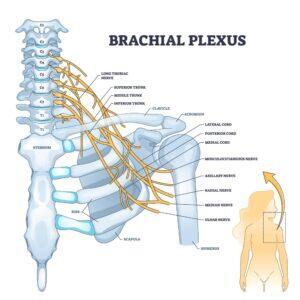
The brachial plexus is formed by nerve roots from C5 to T1 of the spinal cord. These nerves pass through the neck and shoulder before branching into the arm.
Each part of this network controls a specific function:
- Shoulder movement
- Elbow bending
- Wrist control
- Finger movement
- Sensation across the arm
👉 A brachial plexus injury can disrupt one or multiple of these functions depending on the level of damage.
Early Signs of Brachial Plexus Injury
A brachial plexus injury does not always present suddenly. In many cases, symptoms develop gradually.
1. Progressive Weakness
Patients may notice that one arm feels weaker than the other. Tasks like lifting objects, raising the arm, or pushing become difficult.
This occurs because the nerve signals to the muscles are reduced or interrupted in a brachial plexus injury.
2. Loss of Fine Motor Skills
Activities like writing, buttoning clothes, or holding small objects become challenging. This indicates involvement of distal nerve branches.
3. Sensory Changes
Numbness, tingling, or reduced sensation is a key sign. Patients may feel “pins and needles” or complete loss of feeling in certain areas.
4. Neuropathic Pain
Unlike normal pain, nerve pain in a brachial plexus injury is sharp, burning, or electric shock-like, often radiating from the neck to the hand.
Causes of Brachial Plexus Injury (Advanced & Detailed Explanation)
1. Road Traffic Accidents (High-Impact Trauma)

Road traffic accidents are the leading cause of severe brachial plexus injury, particularly in young individuals.
Mechanism:
During an accident, especially in two-wheeler crashes, the shoulder is forcefully pulled downward while the neck moves in the opposite direction. This creates a traction force on the nerve roots.
Clinical Impact:
- Stretch injuries
- Partial tears
- Complete avulsion (nerve pulled from spinal cord)
👉 These injuries are often severe and may require surgical reconstruction.
2. Industrial or Workplace Injuries (Crush & Traction Forces)
Industrial injuries are often more complex and severe compared to other causes of brachial plexus injury.
How It Happens:
Workers operating heavy machinery may experience:
- Crush injuries, where the shoulder or arm is compressed between machines
- Traction injuries, where the arm is suddenly pulled or trapped in rotating equipment
Why These Injuries Are Serious:
Unlike simple trauma, these injuries often involve:
- Combined nerve and muscle damage
- Blood vessel injury
- Tissue loss or necrosis
Clinical Challenges:
These cases often present late because patients initially ignore symptoms. By the time they seek treatment, the brachial plexus injury may have progressed significantly.
👉 Early workplace injury assessment is crucial to prevent long-term disability.
3. Sports Injuries (Acute & Repetitive Stress)
Sports-related brachial plexus injury is commonly seen in contact sports.
Mechanism:
- Sudden sideways bending of the neck
- Direct blow to the shoulder
- Repeated stretching during play
Types:
- Stingers/Burners: Temporary nerve irritation causing sharp burning pain
- Chronic microtrauma: Repeated minor injuries leading to long-term nerve damage
Clinical Insight:
Athletes often ignore early symptoms and continue playing, which worsens the injury over time.
👉 Repeated minor trauma can evolve into a significant brachial plexus injury.
4. Birth-Related Injury (Obstetric Brachial Plexus Injury)
This type of brachial plexus injury occurs during childbirth and affects newborns.
Risk Factors:
- Large baby size
- Prolonged or difficult labor
- Shoulder dystocia (baby’s shoulder gets stuck)
Mechanism:
Excessive traction applied to the baby’s neck during delivery stretches the brachial plexus.
Clinical Presentation:
- Weak or immobile arm
- Abnormal positioning of the limb
Prognosis:
- Mild cases may recover naturally
- Severe cases require early physiotherapy or surgery
👉 Early pediatric evaluation is essential for optimal recovery.
Types of Brachial Plexus Injury
- Neuropraxia: Temporary nerve disruption
- Rupture: Nerve torn but still connected
- Avulsion: Nerve completely detached
👉 The severity of a brachial plexus injury determines treatment and recovery.
Diagnosis (Professional Evaluation)
Diagnosis involves:
- Clinical examination (strength, reflexes, sensation)
- MRI imaging
- EMG and nerve conduction studies
👉 Accurate diagnosis is essential for planning treatment of a brachial plexus injury.
Treatment Options (Step-by-Step)
Surgical Treatment
When Needed:
- No improvement after 3–6 months
- Severe nerve damage
Procedures:
- Nerve grafting
- Nerve transfer
- Muscle transfer
👉 Surgery helps restore function in advanced brachial plexus injury cases.
Why Timely Treatment Matters
Early Treatment:
✔ Better nerve regeneration
✔ Improved muscle recovery
Delayed Treatment:
❌ Muscle wasting
❌ Permanent disability
Conclusion
A brachial plexus injury is a serious condition that requires early recognition and timely treatment. Whether caused by trauma, workplace injury, sports, or childbirth, the outcome depends heavily on how quickly treatment begins.
👉 Ignoring early symptoms can lead to long-term complications, while early intervention can significantly improve recovery.
Don’t ignore weakness, numbness or loss of
movement in your arm.
👉 These could be signs of a brachial plexus injury
Consult a specialist today and take the first step toward recovery.
Frequently Asked Questions
Recovery depends on the severity of the brachial plexus injury. Mild injuries (like neuropraxia) can heal completely over weeks to months with physiotherapy. However, severe injuries involving nerve rupture or avulsion usually require surgery. Even with surgery, recovery may take months to years and may not always be 100%, but significant functional improvement is often possible with early treatment.
If your brachial plexus injury causes persistent weakness, inability to move the arm, numbness, or severe burning pain, it is likely serious. These symptoms indicate deeper nerve involvement and require immediate specialist evaluation.
Surgery is usually recommended when there is no improvement within 3–6 months, or when imaging shows severe nerve damage. In such cases, early surgical intervention for a brachial plexus injury can significantly improve outcomes.
For most common hand surgeries (trigger finger, carpal tunnel, ganglion cyst), full function recovery is expected. For complex cases (severe nerve injuries, fractures with complications), recovery depends on the damage severity — Dr. Karn will give you realistic expectations at your consultation.
Delaying treatment in a brachial plexus injury can lead to muscle wasting, permanent weakness, and reduced chances of nerve recovery. After a certain period, even surgery may not fully restore function.
Physiotherapy is essential in all cases of brachial plexus injury, but it is not always sufficient. Mild cases may recover with therapy alone, but moderate to severe injuries often need surgical repair followed by rehabilitation.

Dr. Karn Maheshwari
FNB (Hand & Microsurgery) | MS Ortho | DNB Ortho | Founder, Krisha Hand Hospital
Dr. Karn Maheshwari is the founder of Krisha Hand Hospital, Ahmedabad, established in 2016. He is the only FNB-qualified hand surgeon across Gujarat, Rajasthan, and Madhya Pradesh.
With MS and DNB in Orthopedics, Dr. Maheshwari specializes in treating a wide range of hand and wrist conditions, including carpal tunnel syndrome, sports hand injuries, orthopedic hand surgery, ganglion cysts, mangled hand injuries, congenital hand differences, brachial plexus palsy, cerebral palsy & spastic hand, hand tendinopathy, hand microsurgery, hand swelling, hand transplants, hand reimplantation, rheumatoid hand deformities, and peripheral nerve injuries & compressive neuropathies.
Dr. Maheshwari’s unmatched expertise and patient-centric approach ensure world-class treatment, advanced surgical solutions, and optimal recovery for patients with complex hand and wrist conditions.